


I consider myself a very lucky person. For example, in 2023, I woke up one morning with $550 in StubHub credit from a lawsuit settlement I don’t remember claiming. These sorts of things happen to me. Don’t sleep on those! A few minutes later, I looked around for the most expensive yet accessible ticket I could find.
It could’ve been weekend 1 of Coachella that year when Frank Ocean bombed. I didn’t know that’d happen, but there was always really only one answer: Taylor Swift. The Eras Tour. Atlanta Night 1. I felt like Charlie Bucket. My ticket got me just enough for a nosebleed seat.
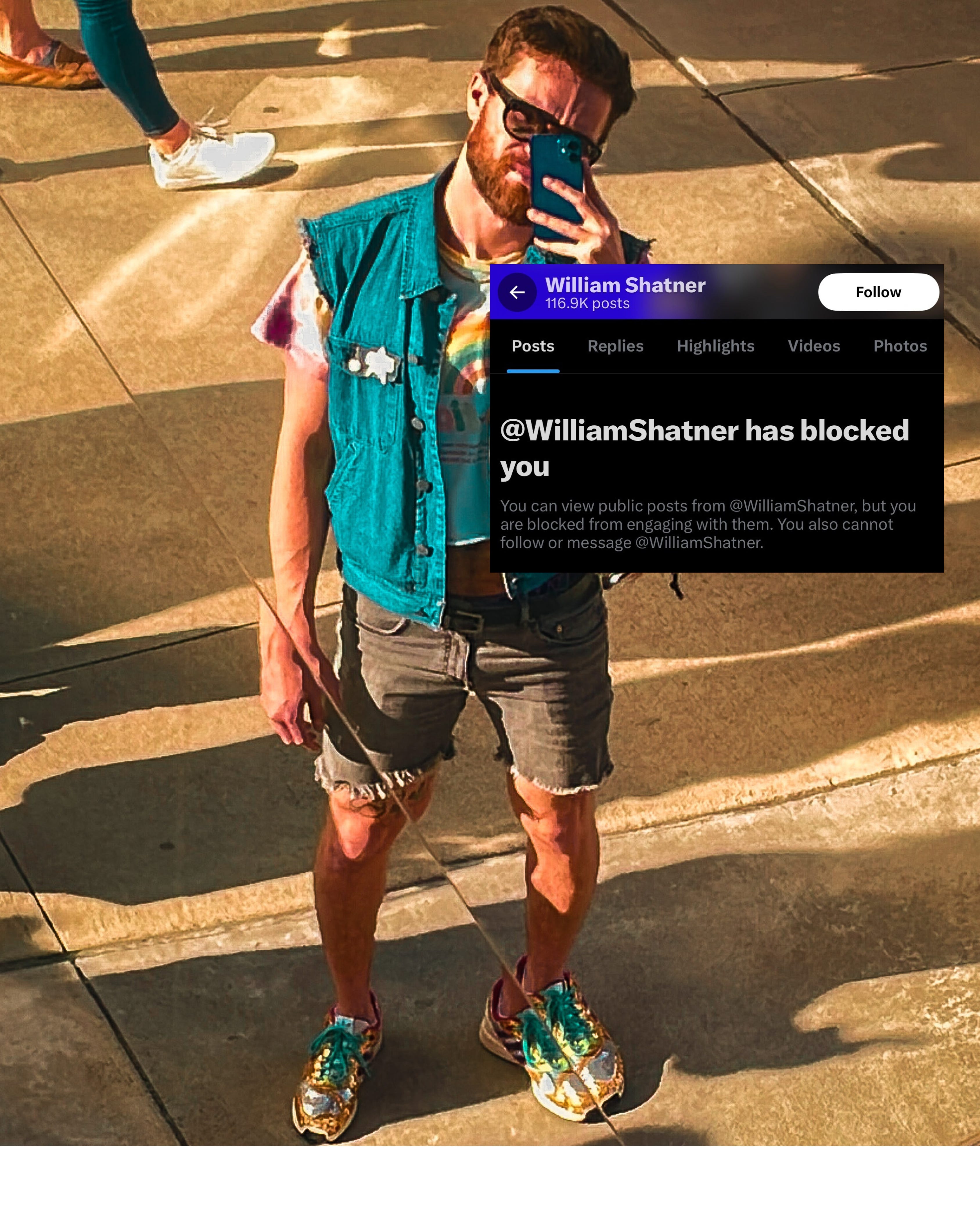
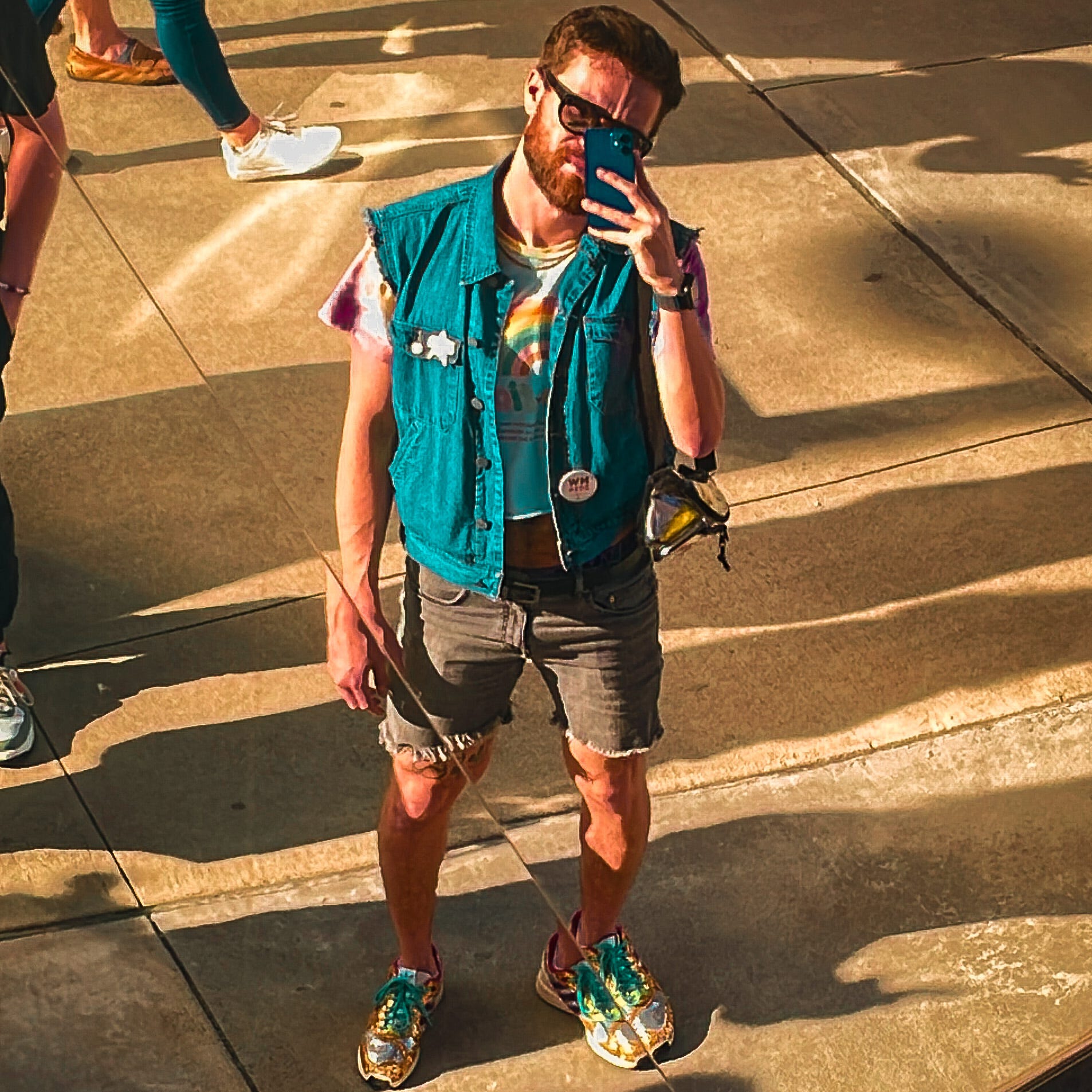
I went alone, wore a tie-dye rainbow Carly Rae Jepsen crop top, a denim vest, and my Snapchat Spectacles, because I’m a nerd. On the vest: a Star Trek pin. That same weekend, Janet Jackson was doing a few nights at State Farm Arena next door.
I left the Mercedes Benz Stadium a couple of songs early — it’s three and a half hours, I’d had my fill for a show I already knew by heart by then — and floated back toward the MARTA station with my headphones in, doing what anyone who knows me knows I do: twirling and dancing down the sidewalk in my own little world.
As I got to the station, a subway car full of Janet Jackson fans in full Rhythm Nation garb (black leather, the whole thing) was on their way home too, and here I am in a rainbow crop top, admittedly not fully reading the room as I walked up.
The whole car roared “NO!”. I staggered back. Snapping out of my lavender haze. I thought I had enough space on the train, but the last thing I was going to do was argue over it.
I take a step back. Then two women snapped their fingers at me, “No. No. He’s cool. He’s got a Star Trek pin. Let him on.”
And they did. This is how we heal the nation.
Before she was cast as Guinan in The Next Generation, Whoopi Goldberg recalled watching the original Star Trek at age nine and running through her house saying, “Come here, mum, everybody, come quick, come quick, there’s a Black lady on television and she ain’t no maid!”
She later told Roddenberry directly, “Before Lt. Uhura, there were no Black people in the future. I’m telling you, before this character, there was no representation of a person of color in the future... I just want to be part of that thing that says, ‘Yes, we will be in the future.’” That discovery changed her life, changed Trek, and changed what representation in science fiction looks like.
The Hollywood Reporter: Divisive ‘Star Trek: Starfleet Academy’ Canceled After Two Seasons
Not a single episode of Starfleet Academy cracked Nielsen’s Top 10 streaming charts across its entire first season, nor has it aired in my living room. I don’t have a personal opinion on it yet. Cast seems fun! I fell asleep mid-episode two! I’ll go back. However, its cancellation and the rest of the streaming era of Trek (Discovery, Picard, Strange New Worlds, Starfleet Academy) are symptomatic of larger issues with all the shows, even if this one is getting the most heat from the anti-woke mob.
In exchange for the VHS-like hum of the warp core engine that lulls so many Next Generation fans to sleep, modern Trek — kneecapped by shortened seasons and stunt casting — comes off like Glee in space. The musical episode of Strange New Worlds didn’t help. In contrast, the pre-2005 characters were interesting, funny, and unique, but most importantly, they were professionals who did a job. It’s actually good and entertaining to watch experts make tough decisions in their fields. It’s what made Star Trek tactile and relatable. I would love that job. I would love to do that job in space.
By putting Trek behind a paywall, Paramount+ limited its scope to those already interested in the franchise. Nobody stumbles on an episode of Discovery or Strange New Worlds the way earlier Trek hooked channel surfers like teenage me with rabbit ears on UPN.
Whoopi found the show because it was on a terrestrial TV network. A nine-year-old Black girl in 1966 stumbled onto Uhura. You can’t stumble onto a $6.99/month paywall. Representation can’t matter when accessibility is the problem.
The show that imagines a post-scarcity future is locked behind a subscription fee. You can’t make this shit up.
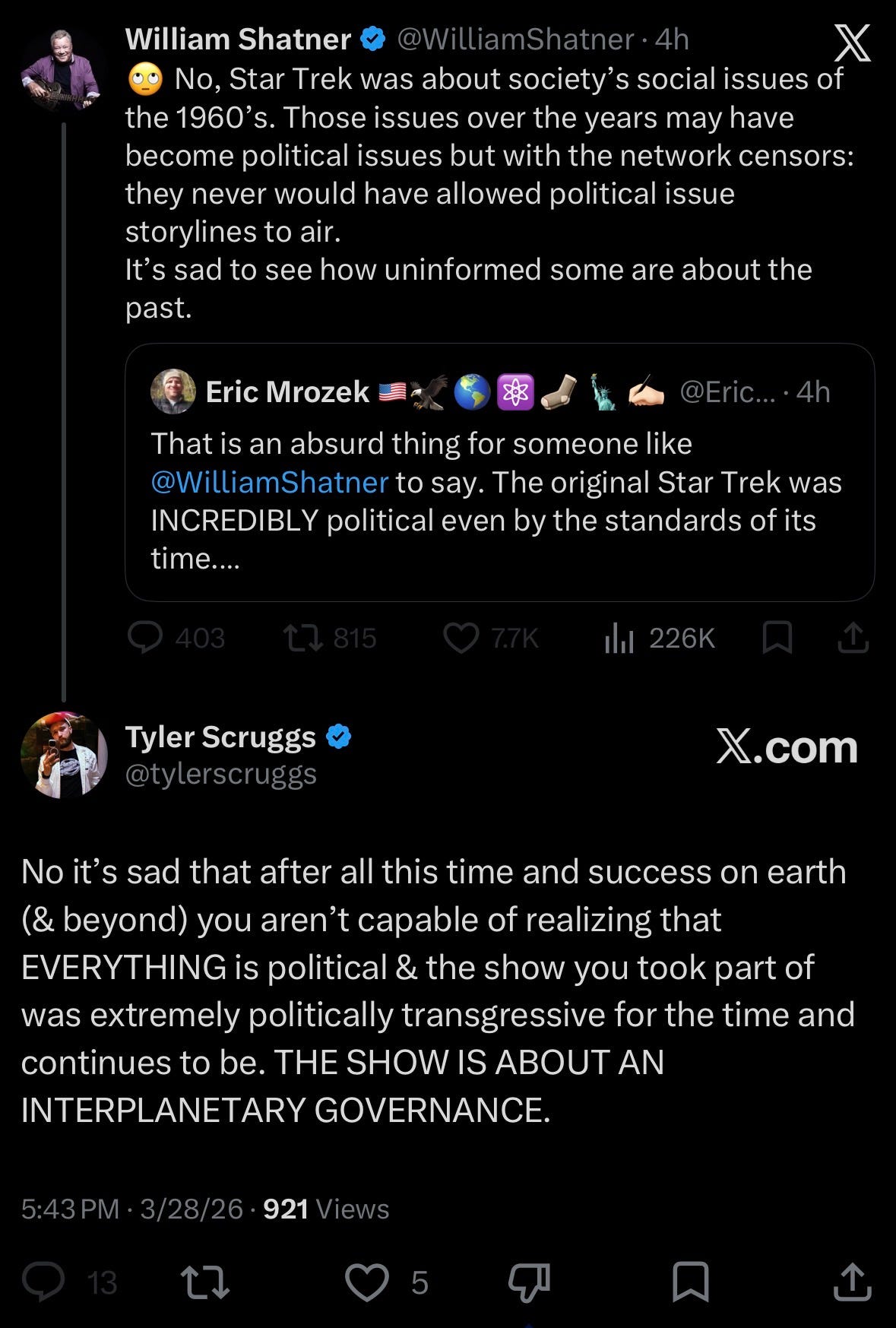
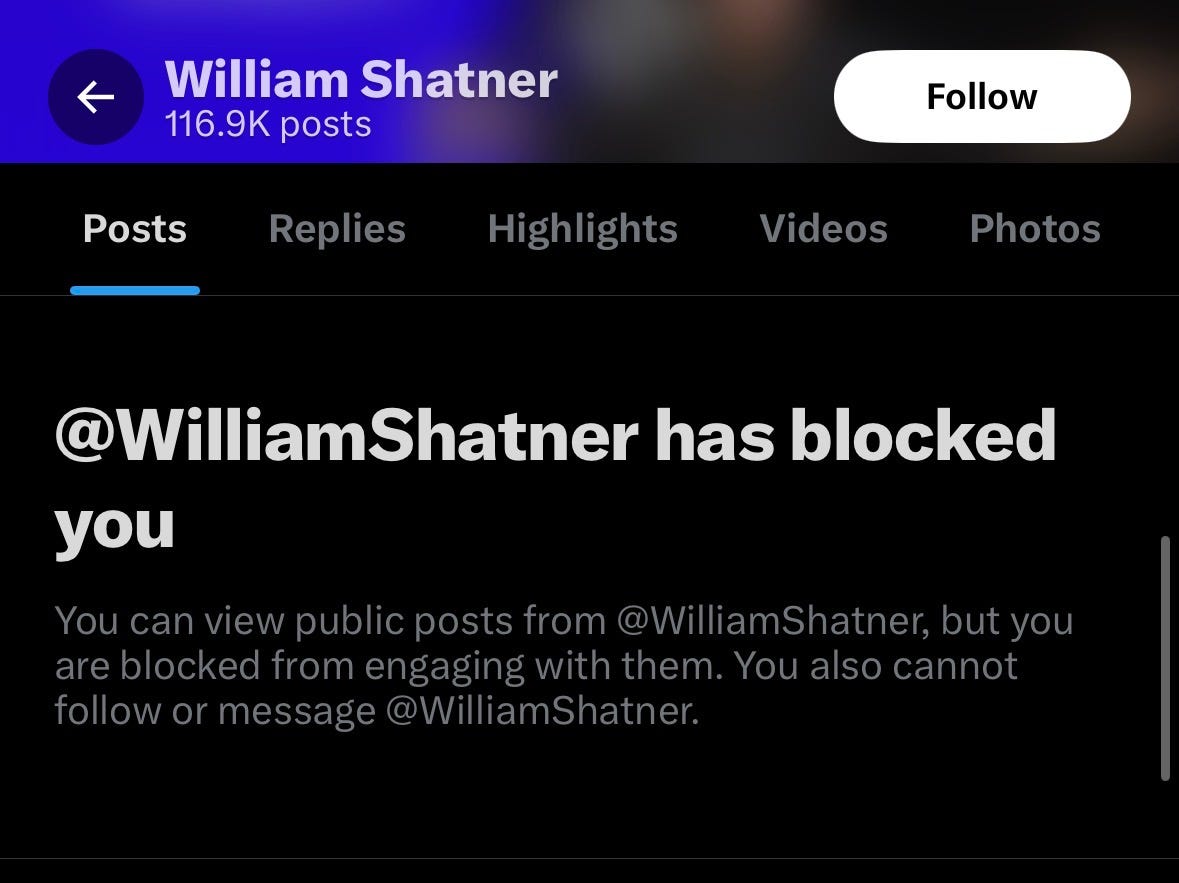
While I admit that my tweet’s a bit shouty for an old man’s telephone, I maintain my stance. Star Trek, like everything, is political. The political is always already present in any depiction of how humans organize, share, and treat one another. Politeia — the Greek word meaning of the people. What’s infuriating is that the man who played Captain Kirk and the thousands who defended him online can’t see past their own ideological framing.
The pin got me on the train with those women because of what it symbolizes, not because of who was wearing it. So Shatner’s “I was there” defense is weaksauce. The show transcends his lived experience of making it. That’s what art does, ideally. Star Trek belongs to everyone and no one. It belongs to everyone who’s ever been let onto a train because of what it stands for. That’s the show doing what it’s designed to do.
I stumbled upon a conservative Trek essayist recently who argued that Star Trek is, in fact, right-wing and conservative, and while I obviously disagree with him, I found some of their points worth engaging with.
They argue that Trek depicts capitalism’s end state rather than its abolition. Similar to how cheap it is to produce and purchase a nail, capitalism will eventually provide enough affordable abundance a la Star Trek’s replicator tech. He’s not entirely wrong that replicators — Trek’s idea that things like food and hardware are free and easy to make/distribute — aren’t redistribution in the socialist sense.
But his conclusion is backwards, and I don’t think he’s seen Wall-E. When material scarcity is abolished, the entire ideological infrastructure of capitalism — competition, ownership, wage labor, profit motive — has nothing left to justify itself. That’s not capitalism winning. That’s capitalism becoming irrelevant. The United Federation of Planets isn’t a capitalist paradise. It’s what’s left when capitalism’s problems have been solved by other means.
Star Trek works as popular mythology because both conservatives and progressives see themselves in it. But only because the show depicts a world where the ideological battle has already been won — not by one side, but by the conditions that made the battle irrelevant. I submit all of Deep Space Nine to the court as evidence, but I digress.
The conservative Trekker argues Starfleet is expressly anti-woke — merit over identity. But this only works as a conservative argument if you ignore why meritocracy is contested today in the first place. Meritocracy functions fairly only when the starting conditions are equal. The Federation works as a meritocracy precisely because poverty, disease, and repression have been eliminated. You can’t separate Starfleet’s meritocracy from the post-scarcity conditions that make it possible.
Meritocracy, like representation, can’t matter when accessibility is the problem.
What does he think truth, morality, and what we owe one another are, if not political? He’s describing politics while insisting it isn’t. That’s politeia.
“Star Trek was an attempt to say that humanity will reach maturity and wisdom on the day that it begins not just to tolerate, but take a special delight in differences in ideas and differences in life forms.” - Gene Roddenberry, the creator of Star Trek.
On October 13, 2021, Shatner flew on Blue Origin’s New Shepard NS-18 mission — a suborbital flight. At 90, he became the oldest person to fly in space. He was a guest of Blue Origin and did not pay for the trip.
Shatner was not the first Star Trek actor in space, fun fact. NASA astronaut Mae Jemison, who appeared in a TNG episode and flew on the shuttle Endeavour in 1992, was the first. She is also the first Black woman in space. He told billionaire Jeff Bezos on the trip, “What you have given me is the most profound experience I can imagine. I hope I never recover from this.” Bezos then popped champagne, famously interrupting Shatner mid-thought.
In his 2022 book Boldly Go, he described the experience very differently — calling it grief-stricken. He wrote that the contrast between the coldness of space and the warmth of Earth below overwhelmed him with sadness, saying, “My trip to space was supposed to be a celebration; instead, it felt like a funeral.”
What Shatner experienced is called the Overview Effect: the overwhelming awareness of Earth’s fragility that space travelers often feel when viewing the planet from above. I haven’t been to space yet, but I know the feeling. If Captain Kirk can’t or won’t connect the dots on his own work, I’ll do it for him.
Tyler Scruggs is a writer, musician, and thrift store manager based in Tucson, Arizona. His new album, In Town For Work, is coming in 2026.